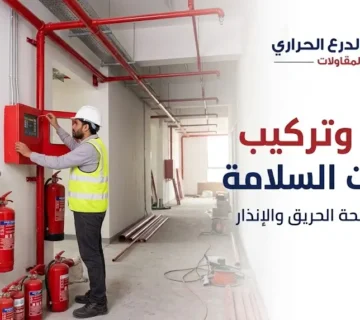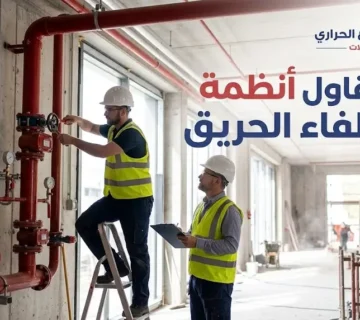

Vital facilities in the Kingdom of Saudi Arabia and the Arabian Gulf states demand absolute operational efficiency for firefighting systems, and executing fire networks hydrostatic pressure testing serves as the fundamental engineering step to verify pipe integrity, leak-free condition, and capability to withstand maximum operating pressures and emergency flows per approved international codes.
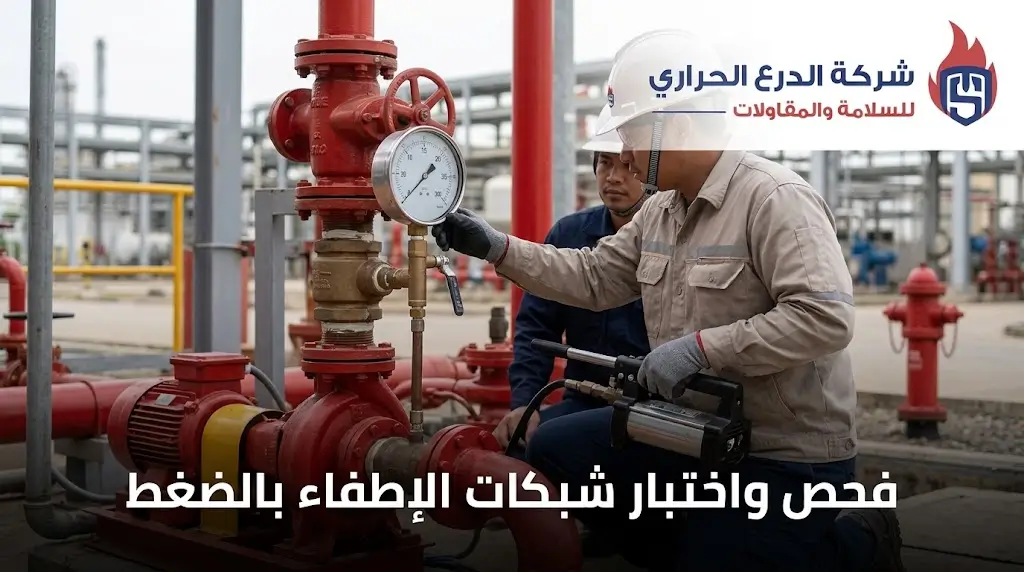
Table of Contents
- Standards for Fire Networks Hydrostatic Pressure Testing
- Mechanisms for Fire Network Pressure Testing and Hidden Leak Detection
- NFPA 1962 Standards for Periodic Fire Hose Testing and Inspection
- NFPA 1910 Standards for Fire Pump Maintenance and Testing
- Fire Pump Maintenance Procedures and Flow Efficiency Assurance
- Application of NFPA 1900 Standards for Safety Systems and Equipment
- Field Precision Inspection of Ground Ladders and Aerial Devices
- Network Fault Monitoring and Sudden Pressure Drop Remediation
- Periodic Testing and Inspection Program Schedule
- Certified Engineering Inspection Services via Thermoshield Company
- Frequently Asked Questions
- Conclusion
Call Us |
Fire networks hydrostatic pressure testing is executed by completely isolating the piping network, connecting a calibrated hydrostatic test pump, gradually raising pressure to 1.5 times normal operating pressure (or a minimum of 200 psi above normal pressure for two hours), and monitoring drop indicators via precise digital manometers to detect any hidden leaks and ensure safety compliance.
Standards for Fire Networks Hydrostatic Pressure Testing
The methodology of fire networks hydrostatic pressure testing relies on subjecting all main and sub-lines to precise test pressures exceeding normal operating pressure to evaluate connector, joint, and weld resistance to high mechanical loads, preventing sudden collapses in critical fire networks.
Mechanisms for Fire Network Pressure Testing and Hidden Leak Detection
Engineering detection mechanisms include fully purging air from the network to guarantee reading accuracy, then injecting and pumping water gradually while inspecting valves and fire feeding lines using analog and digital pressure gauges to identify unpermitted drop points with over 99% accuracy and replacing damaged parts immediately.
Call Us |
NFPA 1962 Standards for Periodic Fire Hose Testing and Inspection
NFPA 1962 specifications dictate mandatory requirements for inspecting surface and re-coupled fire hoses annually and after each actual use. This includes visual inspection for wear and tears, and performing hydrostatic pressure testing to verify external jacket and brass coupling integrity, preventing bursting under high pump pressures.
NFPA 1910 Standards for Fire Pump Maintenance and Testing
NFPA 1910 standards impose comprehensive testing protocols for fixed and apparatus-mounted fire pumps, focusing on measuring flow rates, water lift efficiency, mechanical performance curves, and testing diesel, gasoline, or electric engine efficiency under maximum loads for continuous time periods.
Fire Pump Maintenance Procedures and Flow Efficiency Assurance
Fire pump maintenance demands meticulous inspection of motion shafts, packing glands, cooling systems, check valves, and electrical control panels to guarantee immediate pump response and secure continuous water flow without interruption under emergency conditions.
Application of NFPA 1900 Standards for Safety Systems and Equipment
Thermoshield applies comprehensive NFPA 1900 standards for designing and testing firefighting appliances, equipment, and specialized vehicles, ensuring all mechanical and hydraulic parts conform with stringent international requirements to protect lives and property from destructive fire hazards with high efficiency.
Field Precision Inspection of Ground Ladders and Aerial Devices
Field inspection of ground ladders and aerial devices requires precise load testing evaluating flexibility of aluminum or fiberglass structures, verifying mounting joints and base supports are free from hairline cracks or metal corrosion caused by harsh environmental factors. Regular engineering inspection of aerial devices and elevated master streams also ensures safety of hydraulic systems governing platform and ladder movements per NFPA 1932 requirements.
Network Fault Monitoring and Sudden Pressure Drop Remediation
Sudden pressure drops in hydraulic networks are handled through comprehensive inspection via acoustic tools and radiation leak detection equipment, alongside reviewing main/sub-valves and pressure relief valves to isolate flaws precisely and repair them radically.
Periodic Testing and Inspection Program Schedule
| Engineering Inspection Type | Execution Frequency | Approved International Standard | Operational & Preventive Objective |
|---|---|---|---|
| Fire Networks Hydrostatic Pressure Testing | Every 5 years | NFPA 25 / NFPA 13 | Verify pipe integrity and operating pressure resistance |
| Fire Hose Testing | Annual | NFPA 1962 | Prevent hose damage and ensure high-pressure durability |
| Fire Pump Testing | Weekly / Annual | NFPA 20 / NFPA 1910 | Ensure flow rates and immediate readiness |
| Ladder & Equipment Inspection | Annual | NFPA 1932 / NFPA 1900 | Guarantee structural safety of elevated equipment |
Certified Engineering Inspection Services via Thermoshield Company
Fire networks hydrostatic pressure testing is executed by elite certified engineers and technicians at Thermoshield Company per latest global specifications, delivering a safe work environment fully compliant with Civil Defense requirements, and free from operational gaps impeding prompt emergency intervention.
Call Us |
Frequently Asked Questions
What are the approved timeframes for fire network pressure testing?
Fire networks are subject to a comprehensive hydrostatic pressure test every 5 years maximum, along with monthly and annual operational functional checks to verify system leak-free status.
How are NFPA 1962 standards applied to fire hoses?
A full visual inspection of hoses is conducted for wear and tears, followed by an annual hydrostatic pressure test at rated operating pressure to ensure structural integrity and prevent bursting.
What are the key indicators of fire pump failure during testing?
Indicators include sudden discharge pressure drops, bearing overheating, abnormal vibration noises, or pump failure to achieve required flow rates per performance curves.
Does Thermoshield provide Civil Defense accredited reports?
Yes, Thermoshield provides fully documented and certified engineering reports compliant with Civil Defense requirements and international code standards to facilitate license issuance and renewal.
What procedure is followed when pressure drops are detected in the network?
Network sections are isolated progressively, hydrostatic pressure is injected, and acoustic leak detection equipment alongside digital tools are used to locate leaks precisely for engineering repair.
Why is fire networks hydrostatic pressure testing essential for facilities?
Because it ensures absolute readiness of suppression systems for emergency intervention, prevents loss of life and property, and achieves total compliance with global safety standards via Thermoshield.
Conclusion
Do not leave your facility’s safety and operations to chance; schedule fire networks hydrostatic pressure testing, pump maintenance, and hose inspections with global quality standards alongside specialized experts at Thermoshield to ensure maximum readiness and full compliance with safety conditions (thermoshield.sa).