

Understanding and precisely applying industrial safety requirements transforms a facility from a mere production site into a safe, sustainable working environment aligned with Saudi Vision 2030.
Industrial safety requirements encompass multiple dimensions, including operational safety, fire fighting systems, protection from chemical and thermal hazards, physical security, and ongoing employee training. These standards are not a static checklist, but a dynamic framework that evolves alongside modern technology and the specific nature of each industrial sector.
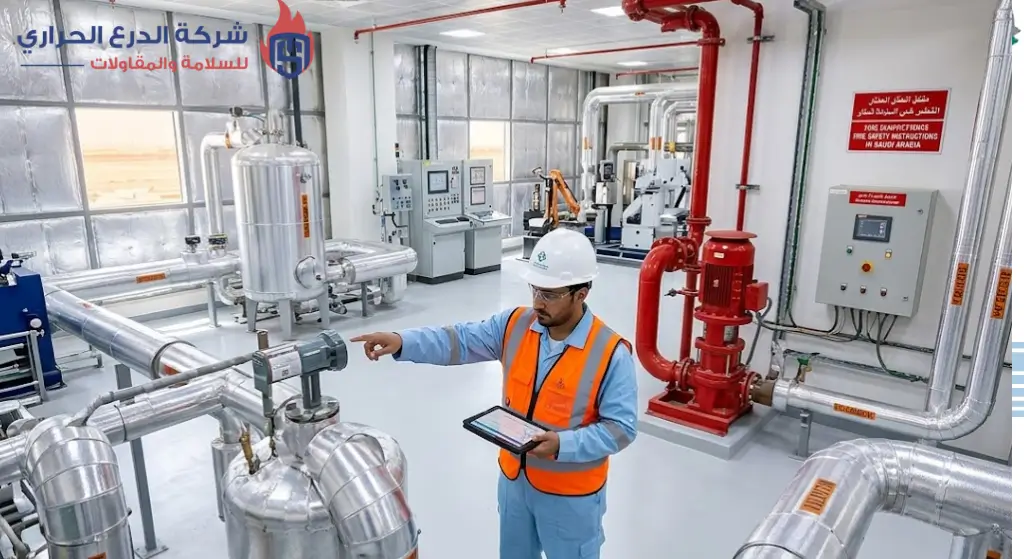
Table of Contents
- Industrial Safety Requirements: A Priority in Saudi Facilities
- Key Components of Industrial Safety Requirements
- The Role of Thermoshield in Fulfilling Industrial Safety Requirements
- Practical Steps to Implement Industrial Safety Requirements in Your Facility
- Common Challenges and How to Overcome Them
- Frequently Asked Questions
- Conclusion
| 📞 Call Us |
Industrial Safety Requirements A Priority in Saudi Facilities
The High Commission for Industrial Security (HCIS) supervises vital sectors such as petroleum, petrochemicals, electricity, mining, and chemical industries, regulating security, safety, and fire protection across these establishments. Compliance with these standards reduces workplace accidents, lowers costs stemming from production downtime, and enhances investor and partner trust.
In practice, the true significance of industrial safety requirements becomes evident during minor incidents such as an electrical spark or a flammable spill. If systems are functional and personnel are trained, the issue is quickly contained. However, if proper measures are absent, a minor incident can escalate into a major disaster affecting lives, the environment, and commercial reputation.
These requirements vary based on business activity, facility scale, and hazard classification. Chemical plants demand far stricter controls than light manufacturing workshops; however, foundational principles remain universal: risk assessment, prevention, early detection, rapid response, and training.
Key Components of Industrial Safety Requirements
1. Risk Assessment and Management
Every effective safety system begins by identifying potential hazards, including:
- Mechanical hazards arising from machinery and equipment.
- Electrical and fire hazards.
- Chemical and toxic gas exposure.
- Heat stress, particularly under the Saudi climate.
- Risks associated with working at heights or in confined spaces.
Risk assessments must be documented and reviewed periodically, particularly after process or equipment modifications. HCIS emphasizes reviewing engineering drawings to ensure safety elements are integrated starting from the design phase.
2. Fire Fighting and Early Warning Systems
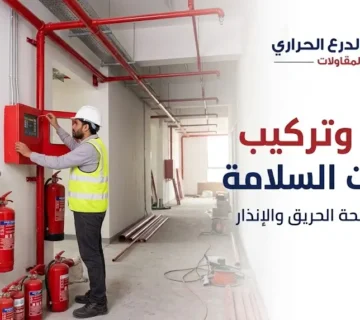
Fire protection and alarm installations represent primary pillars of industrial safety requirements, including:
- Fire extinguishers matching specific material hazards (dry powder, CO2, foam).
- Automatic sprinkler systems in high-risk zones.
- Fire pumps and reserve water storage tanks.
- Smoke, heat, and gas detection devices.
- Smoke management systems ensuring clear evacuation routes.
These installations must strictly comply with Civil Defense specifications and undergo regular maintenance and testing. System failures expose facilities to regulatory fines and compromise worker safety.
3. Personal and Environmental Protection
Providing task-appropriate Personal Protective Equipment (PPE) is non-negotiable. Helmets, safety goggles, heat/chemical-resistant gloves, safety shoes, and respiratory masks must be accessible, accompanied by proper user training. Requirements also mandate effective ventilation systems to prevent toxic gas or combustible dust accumulation.
Facilities handling hazardous materials face strict storage, transport, and disposal protocols designed to safeguard the surrounding environment.
4. Physical and Cybersecurity for Industrial Facilities
Industrial safety extends beyond fire prevention and physical safety. With growing reliance on Industrial Control Systems (ICS and OT), cybersecurity is now an integral part of industrial safety requirements, encompassing:
- Segmenting operational networks from enterprise IT networks.
- Controlling and monitoring remote access.
- Continuous system health monitoring.
- Cyber incident response planning.
On the physical front, regulations require CCTV surveillance networks, security gates, and zone-based access control.
5. Training, Awareness, and Documentation
Safety systems are ineffective if personnel are unable to operate them. Regular training programs must cover:
- Evacuation drills.
- Operating fire fighting gear.
- Handling chemical spills.
- First aid procedures.
Accurate logs of incidents, investigations, maintenance, and training sessions must be maintained for official audits conducted by regulatory authorities.
| 📞 Call Us |
The Role of Thermoshield in Fulfilling Industrial Safety Requirements
Here arises the role of specialized engineering firms that turn regulatory texts into practical, executable solutions. Thermoshield Safety and Contracting delivers integrated solutions covering major industrial safety requirements.
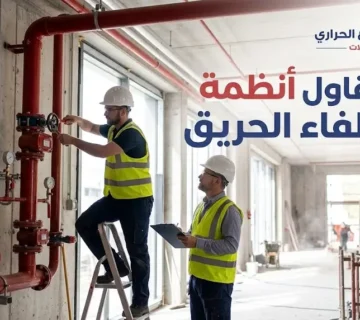
Since its inception, Thermoshield has focused on designing, installing, testing, and maintaining fire fighting, early warning, gas detection, and smoke management systems, alongside thermal insulation and general contracting. Their engineering team ensures full compliance with Civil Defense and international standards, offering core services including:
- Supply and installation of fire pumps and suppression equipment.
- Integrated alarm networks designed to minimize false alarms.
- Heat, smoke, and gas detection systems.
- Thermal insulation works that reduce thermal risks and energy consumption.
- Constructing infrastructure, warehouses, and industrial hangars to safety codes.
Utilizing high-grade materials and modern techniques while committing to execution timelines, Thermoshield provides periodic maintenance and team training, guaranteeing ongoing compliance with industrial safety requirements.
Practical Steps to Implement Industrial Safety Requirements in Your Facility
- Conduct a comprehensive risk assessment in partnership with a specialized engineering firm.
- Review engineering drawings to verify alignment with HCIS and Civil Defense codes.
- Design and install protection systems tailored to your specific industry activity.
- Train all employees and document training sessions thoroughly.
- Establish clear emergency and evacuation plans and test them regularly.
- Execute regular preventive maintenance on safety gear and systems.
- Perform periodic compliance audits and update procedures as needed.
These steps ensure legal compliance, boost operational efficiency, and prevent unexpected costs.
Common Challenges and How to Overcome Them
Many facilities face obstacles implementing industrial safety requirements due to:
- Upfront capital costs for advanced safety installations.
- Shortage of trained internal safety personnel.
- Difficulty integrating new equipment into legacy infrastructure.
- Evolving regulatory standards.
The solution lies in partnering with experienced local specialists like Thermoshield. They deliver tailored solutions fitting project budgets while guaranteeing compliance with updated codes. Investing in safety is not a financial burden, but protection against far greater losses.
Frequently Asked Questions
What is the difference between industrial safety and occupational health?
Occupational health focuses on protecting individual workers from injuries and illness, whereas industrial safety encompasses a broader scope including fire protection, environmental safety, physical security, and cybersecurity for the entire facility.
Do industrial safety requirements apply to all factories?
Yes, though implementation intensity depends on facility classification and risk level. Vital sectors under HCIS supervision face stricter regulatory mandates.
What is the role of Civil Defense in this domain?
Civil Defense sets specifications for fire fighting, alarm systems, and emergency exits, requiring technical approvals before granting operational licenses or expansion permits.
How can one ensure systems are installed correctly?
By contracting accredited firms to handle design, installation, testing, and training, while retaining conformity and maintenance certificates on site.
Is thermal insulation part of industrial safety requirements?
Yes, especially in environments exposed to high temperatures or flammable substances, as effective insulation reduces fire risks and improves working conditions.
| 📞 Call Us |
Conclusion
In conclusion, if you manage an industrial facility or plan to build a new one, do not leave safety to chance. Contact Thermoshield Safety and Contracting for a free engineering consultation, site evaluation, and complete solutions compliant with the highest industrial safety requirements.
Start now—true safety is built before accidents occur, not after. Thermoshield’s team stands ready to be your partner in building a safe and sustainable working environment.
No comment