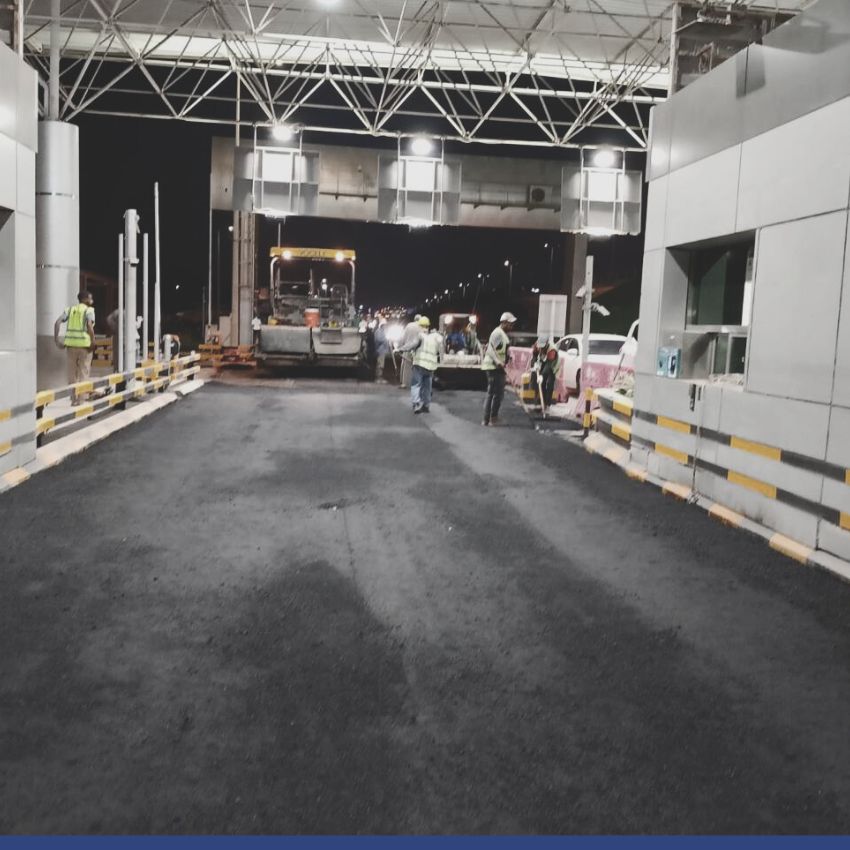

Occupational health and safety is the set of procedures, regulations, and equipment aimed at protecting workers from physical injuries and occupational illnesses during their duties, as well as protecting the facility from risks that could affect its buildings and equipment due to fires or accidents.
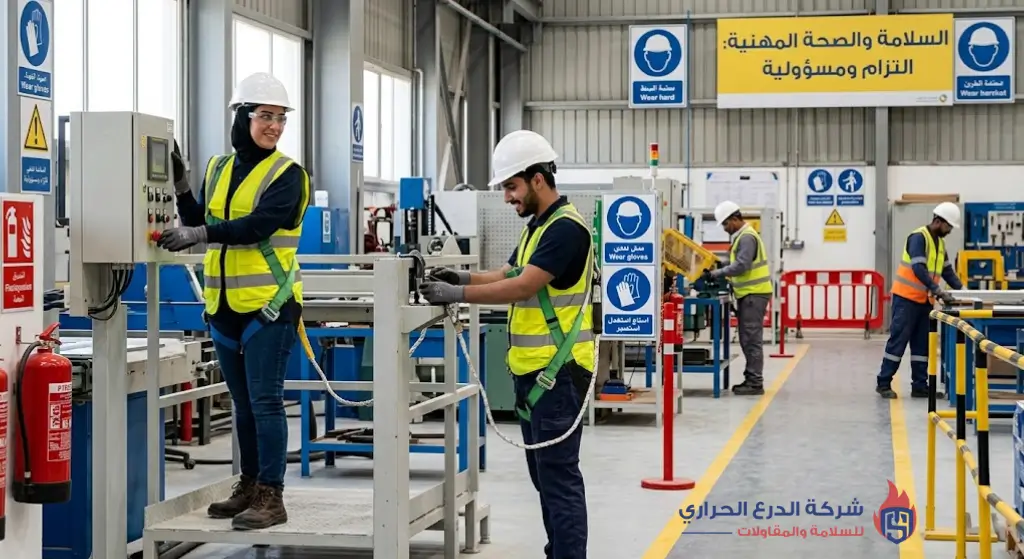
Table of Contents
- What is Occupational Health and Safety?
- Why Do Facilities in Saudi Arabia Need to Implement Occupational Health and Safety?
- What are the Employer’s Obligations in Occupational Health and Safety?
- Personal Protective Equipment and Its Importance in Workplaces
- Risk Assessment in Workplaces
- Evacuation and Emergency Response Plans
- Alarm and Firefighting Systems and Their Role in Occupational Health and Safety
- Civil Defense Licensing and Its Role in Occupational Health and Safety
- Common Mistakes in Applying Occupational Health and Safety
- Occupational Health and Safety Specifically in Contracting Sites
- Who Needs Specialized Occupational Health and Safety Services?
- Services of Thermoshield Safety and Contracting Company
- Frequently Asked Questions About Occupational Health and Safety
- Conclusion
📞 Call Us |
What is Occupational Health and Safety?
Occupational health and safety is a field that combines two interrelated aspects: the first is occupational safety, which focuses on preventing immediate injuries resulting from accidents such as falls, electric shocks, or fires; the second is occupational health, which addresses the prevention of illnesses whose effects appear after repeated exposure, such as respiratory diseases caused by dust or chemical fumes, or hearing issues resulting from continuous noise in industrial work environments.
This definition illustrates that occupational health and safety is not limited to placing a warning sign or handing out helmets to workers, but extends to designing the workplace environment itself, the quality of equipment utilized, the handling protocols for hazardous materials, and the level of worker training for emergency situations.
Why Do Facilities in Saudi Arabia Need to Implement Occupational Health and Safety?
Chapter Eight of the Saudi Labor Law, regarding occupational hazard prevention, constitutes the fundamental baseline obligating employers to provide a safe work environment, alongside the occupational health and safety regulations issued by the Ministry of Human Resources and Social Development, while the General Directorate of Civil Defense supervises the fire prevention requirements across facilities and buildings.
Key Reasons for Implementing Occupational Health and Safety
Among the most prominent reasons that make implementing occupational health and safety a necessity rather than an option:
- Statutory compliance with the Ministry of Human Resources and Civil Defense to avoid violations.
- Protecting workers from permanent or fatal injuries.
- Minimizing unplanned project downtime caused by accidents.
- Safeguarding equipment and buildings against damage from fires or operational failures.
- Building client trust and strengthening relationships with project contracting entities, especially in major construction ventures.
What are the Employer’s Obligations in Occupational Health and Safety?
The Saudi Labor Law mandates a set of fundamental responsibilities on the employer toward personnel inside the facility, including:
- Providing appropriate Personal Protective Equipment (PPE) suited to the job profile free of charge to workers.
- Appointing a qualified safety officer in facilities employing fifty or more workers or conducting high-risk operations.
- Preparing clear emergency and evacuation plans and conducting regular practical training drills for staff.
- Installing fire alarm and suppression systems and maintaining them periodically to ensure constant readiness.
- Conducting periodic medical examinations for employees exposed to specific workplace hazards.
- Maintaining logs for workplace injuries and occupational illnesses and reporting them to competent authorities when required.
- Providing a healthy working environment, including clean drinking water and suitable sanitation facilities.
These obligations remain essential whether the facility is a factory, contracting site, or commercial building; however, the scope and type of procedures are determined by the nature of the activity and its risk exposure.
📞 Call Us |
Personal Protective Equipment and Its Importance in Workplaces
Personal Protective Equipment (PPE) represents the final line of defense between the worker and workplace hazards. PPE varies depending on the operational context: construction sites require hard hats, safety boots, and protective eyewear, whereas chemical handling sites require specialized respirators, chemical-resistant gloves, and protective suits.
How Does a Facility Ensure PPE Effectiveness?
Merely supplying protective equipment is insufficient. Facilities committed to authentic occupational health and safety implementation ensure:
- Selecting equipment tailored to the exact risks of each task rather than issuing generic gear.
- Training personnel on proper wear and maintenance methods.
- Replacing damaged equipment immediately upon identifying wear or defects.
- Monitoring worker compliance regarding PPE usage during operational assignments.
Neglecting any of these measures reduces equipment supply to a superficial formality with no tangible safety impact.
Risk Assessment in Workplaces
How is Risk Assessment Conducted on Site?
Risk assessment begins with auditing all on-site activities, machinery, and materials, followed by pinpointing potential hazards associated with each operation—whether mechanical, electrical, chemical, or work-at-height fall hazards.
Following hazard identification, each item is classified according to occurrence probability and impact severity. Specific preventive controls are then established, such as modifying execution methods, introducing safety barriers, or changing machinery types.
Risk assessment is not a one-time onboarding procedure, but a process requiring regular reviews, especially when introducing new equipment or altering facility workflows. High-risk establishments require certified engineering entities to conduct comprehensive risk assessments—a service provided by Thermoshield Safety and Contracting Company for facilities across the Kingdom.
Evacuation and Emergency Response Plans
What are the Components of an Effective Evacuation Plan?
An effective evacuation plan is an integrated system rather than a decorative schematic mounted on walls, comprising:
- Defining unobstructed, clear evacuation pathways for every wing of the facility.
- Designating safe outdoor assembly points outside the building footprint.
- Distributing defined emergency roles across the internal safety team during incidents.
- Conducting periodic practical evacuation drills for staff rather than purely theoretical sessions.
- Reviewing and updating the blueprint upon architectural alterations or workforce increases.
Facilities requiring specialized expertise in engineering industrial security and safety plans can engage certified firms to align designs with building layout and Civil Defense standards.
Alarm and Firefighting Systems and Their Role in Occupational Health and Safety
Early fire detection networks and fire pump stations represent crucial pillars connecting occupational health and safety with technical engineering; delays in detecting fires translate directly to diminished evacuation windows and escalated losses.
What are the Primary Fire Safety and Protection Systems?
These technical systems generally include:
- Smoke and heat detectors.
- Audible and visual alarm notification appliances.
- Fire pumps delivering required hydraulic pressure to suppression networks.
- Fire-rated doors compartmentalizing fire and smoke spread between building zones.
Routine maintenance of these systems matches the criticality of initial installation, as unmaintained hardware may fail during emergencies. This aspect of safety systems maintenance requires periodic inspections by specialized teams to certify full operational readiness.
Civil Defense Licensing and Its Role in Occupational Health and Safety
Is Civil Defense Licensing Mandatory for Every Facility?
Most commercial and industrial facilities across Saudi Arabia require a Civil Defense license confirming adherence to fundamental safety requirements, which encompasses verifying functional alarm and suppression setups, code-compliant emergency exits, and approved evacuation plans.
Securing this license requires preparing certified safety reports and engineering compliance certificates, prompting facilities to partner with specialized firms to finalize documentation before applying for statutory licensing.
Common Mistakes in Applying Occupational Health and Safety
What are the Most Common Errors Committed by Facilities?
- Procuring protective gear without conducting proper user training for workers.
- Deferring maintenance on fire detection and suppression networks until sudden breakdowns occur.
- Drafting evacuation plans without conducting live practical drills with staff.
- Relying on outdated risk assessments that ignore operational modifications across the facility.
- Appointing an unqualified safety supervisor inadequate for the hazard volume on site.
While these mistakes might seem minor initially, they manifest into serious liabilities during real incidents, exposing the discrepancy between documented protocols and physical on-site enforcement.
Occupational Health and Safety Specifically in Contracting Sites
Contracting and construction sites carry heightened risk profiles compared to administrative spaces due to simultaneous civil, electrical, and mechanical operations occurring around heavy machinery, elevated scaffolds, and exposed wiring.
Critical Safety Requirements on Contracting Sites
Across construction environments, multi-crew coordination becomes an essential pillar of occupational health and safety—such as ensuring electrical tasks are not executed in zones where civil excavation could sever live lines or damage equipment.
Additionally, projects involving HVAC works necessitate specific precautions for handling pressurized gases and system pressure testing.
Who Needs Specialized Occupational Health and Safety Services?
Primary stakeholders requiring specialized occupational health and safety solutions include:
- Factory and warehouse owners requiring integrated fire alarm/suppression systems and approved safety plans.
- Contractors managing construction projects that mandate comprehensive safety plans prior to site mobilization.
- Commercial property and facility managers requiring Civil Defense licenses and periodic safety reports.
- New project developers needing comprehensive risk assessment studies prior to plant commissioning.
All these sectors require partnership with specialized entities capable of delivering integrated engineering and consulting expertise.
Services of Thermoshield Safety and Contracting Company
Do You Require Occupational Health and Safety Services for Your Facility or Site?
Thermoshield Safety and Contracting Company provides end-to-end services covering fire alarm and suppression systems, fire pumps, safety plan design, risk assessment studies, and certified safety reporting for Civil Defense approvals. Contact us to discuss your project requirements and receive specialized technical guidance prior to project rollout.
Frequently Asked Questions About Occupational Health and Safety
What is the difference between occupational safety and occupational health?
Occupational safety focuses on preventing immediate acute injuries from accidents, whereas occupational health focuses on preventing chronic illnesses arising from long-term exposure to operational hazards.
Who is responsible for implementing occupational health and safety in the facility?
The employer bears primary legal responsibility for providing a safe workplace, supported by internal safety personnel and accredited engineering consulting firms.
Is occupational health and safety mandatory for all facilities in Saudi Arabia?
Yes, Chapter Eight of the Saudi Labor Law obligates all employers to meet basic occupational health and safety requirements, with standards expanding based on workforce count and hazard levels.
How do I know if my facility requires a safety supervisor?
Establishments with fifty or more employees, or those involved in high-risk activities such as heavy manufacturing and contracting, must appoint a certified safety officer per Ministry regulations.
How often should evacuation plans be reviewed and updated?
Evacuation blueprints should be updated whenever architectural layouts, staff counts, or operations change, alongside conducting live practical drills at least once annually.
What is the first step to implement an OSH system in a new facility?
The initial step is performing a comprehensive risk assessment to identify potential hazards, followed by engineering the safety, evacuation, and fire protection layouts based on the assessment findings.
📞 Call Us |
Conclusion
Applying occupational health and safety correctly protects personnel and safeguards ongoing business continuity. It always starts with an accurate risk assessment, followed by building practical protocols encompassing protective equipment, alarm networks, and evacuation plans with scheduled audits aligned with operational changes.
If you manage a commercial facility or contracting project requiring technical support across any aspect of occupational health and safety, you can reach out to Thermoshield Safety and Contracting Company via our official portal to discuss your site specifications and obtain specialized advisory support.
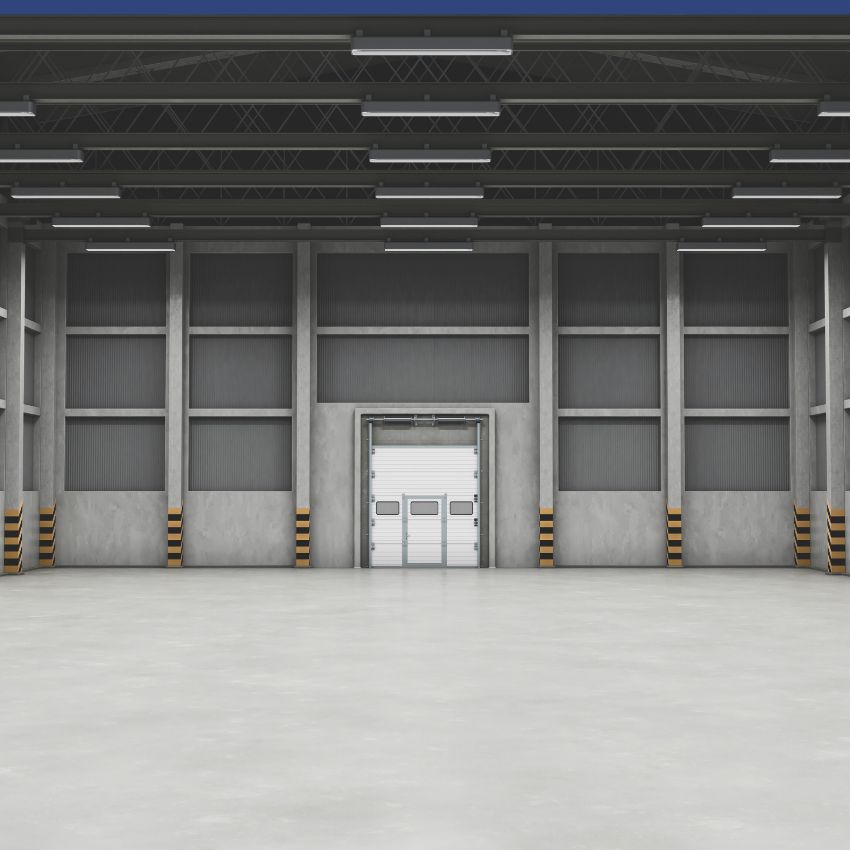
1.Construction of Warehouses & Industrial Hangars
Designing and constructing warehouses and hangars with specifications suitable for industrial or storage use. utilizing metal or concrete structures while considering insulation, ventilation.
2.Construction of Residential Villas
Executing private residential villa projects with distinctive architectural designs and high-quality finishes. ensuring the highest levels of comfort and luxury for the client.

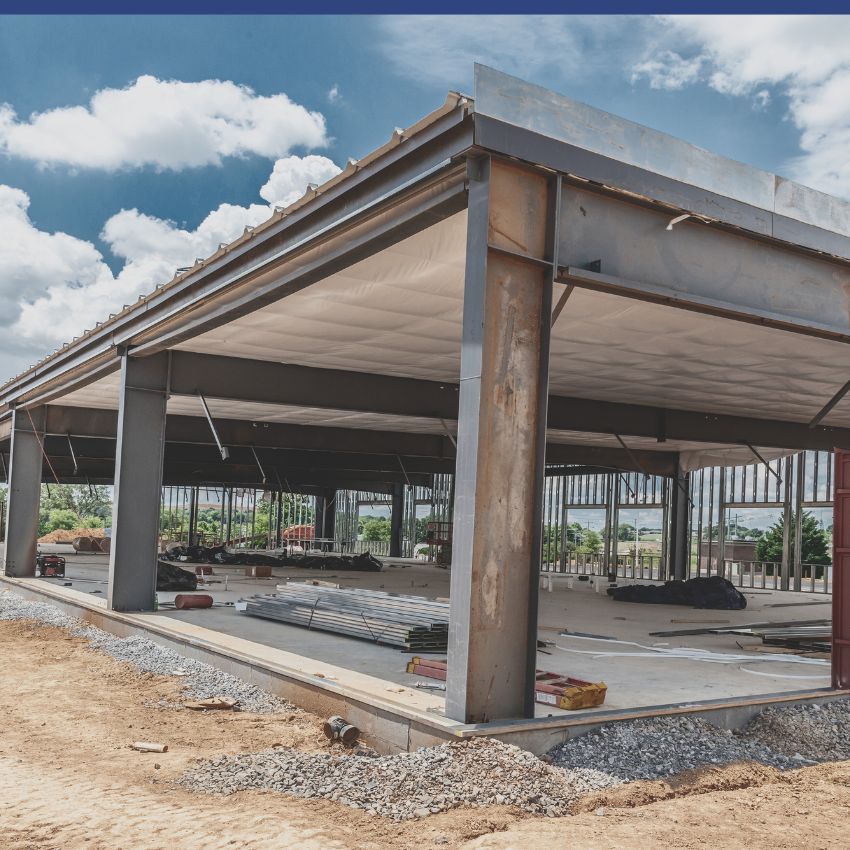
3.Construction of Commercial Buildings
Executing commercial buildings such as offices, showrooms, shops, and commercial complexes. designed to meet business requirements while enhancing visual appeal and operational efficiency
4.Asphalt Works and Infrastructure
Executing roads, pathways, parking lots, and sidewalks, in addition to infrastructure works such as water and electrical networks and stormwater drainage systems. in thermoshield asphalt Works is important.