
An efficiently operating fire pump, a modern early warning alarm system, and code-compliant emergency fire doors collectively cannot protect an industrial facility from an actual disaster if they are not integrated through an industrial security emergency plan that defines who does what, when actions commence, and where personnel must evacuate upon hearing the alarm. Many factory and warehouse owners install individual safety systems only to discover during initial inspections or genuine emergencies that these components do not function as a unified ecosystem. This critical difference between owning safety hardware and executing an actionable response framework is what an emergency plan delivers in practice.
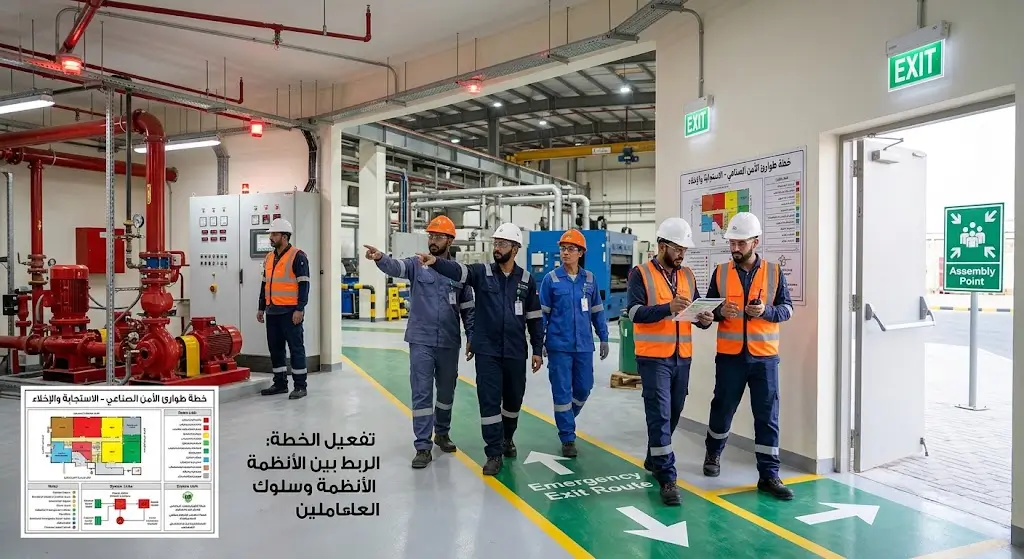
Table of Contents
- What is an Industrial Security Emergency Plan?
- Why are Standalone Safety Systems Insufficient Without an Integrated Plan?
- What are the Core Elements of an Integrated Industrial Security Emergency Plan?
- What are the Steps to Prepare an Industrial Security Emergency Plan?
- What is the Role of Fire Pumps Within the Emergency Plan?
- What are Common Mistakes in Industrial Emergency Planning?
- How Does the Emergency Plan Relate to Civil Defense Licensing?
- What Technical Points Must Be Audited Prior to Plan Approval?
- What is Thermoshield’s Role in Emergency Response Engineering?
- Frequently Asked Questions About Industrial Security Emergency Plans
- Conclusion
📞 Call Us |
What is an Industrial Security Emergency Plan?
An industrial security emergency plan is a comprehensive technical and operational document defining how an industrial facility responds to potential disasters—such as structural fires, hazardous chemical leaks, heavy equipment failures, or total power outages compromising life safety systems.
This plan is not a static document kept in a drawer, but an active operational blueprint connecting alarm and fire suppression hardware with human behavioral protocols, emergency reporting pathways, and external communication with regulatory authorities.
The essential difference between this specialized plan and generic safety guidelines is its grounding in hazard identification specific to the facility’s industrial profile. A chemical plant processing volatile substances requires fundamentally different emergency protocols than a dry logistics warehouse, while a plant operating high-pressure fire pumps requires dedicated procedures to manage potential pump failures during emergencies to fulfill Security and Safety Requirements.
Why are Standalone Safety Systems Insufficient Without an Integrated Plan?
Installing fire pumps alone does not ensure effective mitigation during a major fire, because a pump is merely one node in a larger firefighting network comprising suction reservoirs, distribution headers, automatic sprinklers, and control interfaces.
If one component experiences a mechanical fault or duty operators fail to execute the correct sequence upon alarm activation, even the most robust fire pump cannot prevent catastrophic loss.
This is precisely why an industrial security emergency plan establishes clear integration points across systems—including allowable delay times for pump startup after detection, designated teams responsible for verifying water delivery during evacuations, and standard operating procedures for switching to standby diesel drivers if the electric supply fails.
What are the Core Elements of an Integrated Industrial Security Emergency Plan?
Building a dependable emergency strategy requires cohesive components strictly aligned with official Prevention and Protection Requirements, encompassing:
Facility-Specific Risk Assessment
Developing an emergency blueprint begins with a technical risk assessment identifying site hazards based on industrial processes—such as chemical storage, high-voltage transformers, or flammable materials inventory. This evaluation informs the design of fire suppression systems, pump room locations, and the placement of safe assembly zones.
Designation of High-Hazard Zones
High-risk areas—such as electrical transformer rooms or solvent storage bays—demand tailored response protocols. A robust industrial security emergency plan assigns specific mitigation workflows to each high-risk zone rather than relying on a generic company-wide rule.
Evacuation Routes and Assembly Points
The plan must map clear egress paths for every facility zone, leading directly to outdoor assembly points located safely away from fire and toxic gas plumes. Emergency exit doors must feature certified panic hardware that opens outward smoothly without keys during emergencies.
Defined Roles and Operational Responsibilities
Every plan requires assigning qualified personnel to specific emergency duties—including industrial machinery isolation, floor sweep verification, and official communication with Civil Defense responders. Without designated responsibilities, emergency response breaks down during a crisis.
Emergency Communication and Incident Reporting
The protocol must establish a clear chain of communication, detailing internal notification sequences among shift supervisors and immediate external alerts to emergency response agencies. Reporting delays remain a primary cause of escalating industrial incidents.
Integration with Fire Alarm and Suppression Systems
This interface is the operational core of the industrial security emergency plan. It dictates how early detection automatically triggers fire pump startup, outlines continuous verification of line pressure during active firefighting, and specifies contingency steps if the primary electric pump fails to start.
Practical Drills and Simulation Training
An emergency plan without routine execution remains theoretical. Practical simulation drills train staff and reveal latent operational issues, such as blocked fire doors or egress paths routed through unexpected hazard corridors.
Periodic Review and Plan Updating
Facility layout modifications, equipment upgrades, or production changes mandate updating the plan. Outdated procedures fail to reflect actual site risks, complicating subsequent Renewal of Technical Licenses license renewals.
📞 Call Us |
What are the Steps to Prepare an Industrial Security Emergency Plan?
Developing an industrial security emergency plan follows a rigorous engineering sequence:
- Conducting an on-site risk assessment detailing processes, combustible loads, and structural classifications.
- Reviewing as-built schematics to identify fire pump rooms, alarm panels, and emergency exits.
- Mapping evacuation routes and assembly zones relative to high-risk processing areas.
- Drafting procedures for various emergency scenarios, ranging from localized fires to power losses affecting pumps.
- Assigning operational responsibilities across internal emergency response teams.
- Conducting practical employee training on evacuation procedures and equipment operation.
- Executing live simulation drills and logging operational observations.
- Refining the plan based on drill performance metrics.
- Securing engineering approvals for Safety permits compliance files.
- Conducting regular reviews upon any major industrial modification.
What is the Role of Fire Pumps Within the Emergency Plan?
The fire pump system is the backbone of water-based suppression in an industrial facility. Consequently, an industrial security emergency plan must detail pump operating sequences.
A standard fire pump set operates in an automated sequence: the jockey pump maintains baseline pressure against minor leaks to prevent false alarms.
When a sprinkler opens, line pressure drops further, automatically starting the primary electric pump. If electrical supply fails during the emergency, the standby diesel pump automatically takes over to sustain water pressure.
This operational sequence must be documented within the emergency plan, training personnel to detect sequencing failures that signal the need for hydraulic engineering reviews.
Regular fire pump maintenance and testing are core components of emergency readiness. The plan must establish a verified schedule for maintenance and and periodic operational testing, logging all data to maintain active Safety License certifications.
What are Common Mistakes in Industrial Emergency Planning?
Critical oversights that can undermine emergency response effectiveness include:
- Drafting plans without physical site audits, missing real-world egress bottlenecks or improper assembly points.
- Installing hardware without operational response procedures, leaving systems isolated during emergencies.
- Lacking contingency protocols if primary electric pumps fail before diesel units take over.
- Relying on printed manuals without conducting live simulation drills.
- Failing to revise plans following facility expansions or industrial process changes.
- Using generic emergency templates that overlook the specific hazards of individual production areas.
How Does the Emergency Plan Relate to Civil Defense Licensing?
In Saudi Arabia, an approved industrial security emergency plan is a statutory requirement within the متطلبات for obtaining Civil Defense operating licenses, alongside safety schematics, technical inspection reports, and equipment compliance certificates.
Regulatory inspectors evaluate whether the emergency plan reflects actual site conditions rather than merely checking for documentation.
This regulatory link highlights the importance of rigorous technical preparation; generic plans lacking site-specific hazard assessments can delay Licensing Procedures and require costly revisions.
This guidance serves as an informative overview; formal certification of an industrial security emergency plan requires review by a licensed safety engineer to ensure compliance with applicable building codes.
What Technical Points Must Be Audited Prior to Plan Approval?
Prior to final engineering stamping, verify the following checklist:
- Does the plan cover every production bay and support area across the facility?
- Has the real-world operational switchover between jockey, electric, and diesel pumps been tested?
- Are all evacuation paths clear of temporary storage materials?
- Does each duty shift operator know their emergency role without relying on printed materials?
- Has the plan been updated to reflect recent production line modifications or building expansions?
- Is there a clear communication protocol establishing the sequence for internal and external notifications?
What is Thermoshield’s Role in Emergency Response Engineering?
Thermoshield Safety & Contracting Company provides turnkey fire protection and life safety services—including fire pump installations, early warning alarm networks, risk assessment studies, and certified Security and Safety design—directly supporting the core elements of the industrial security emergency plan outlined here.
When a facility needs to audit its firefighting systems or verify pump room readiness, working with an accredited engineering firm helps identify and resolve technical issues early.
Frequently Asked Questions
What is the difference between an evacuation plan and an industrial security emergency plan?
An evacuation plan is a subset of the broader industrial security emergency plan focusing on safe personnel egress. The emergency plan covers the complete response, including fire pump operations, emergency communications, individual duties, and incident-specific scenarios.
Can a facility omit the diesel fire pump if connected to a stable electrical grid?
This depends on NFPA 20 requirements and facility hazard classification. Unless the utility power is supported by a dedicated secondary substation or listed generator with an ATS, an autonomous diesel pump is mandatory.
How frequently must fire pumps undergo testing?
Testing follows NFPA 25 schedules: weekly operational runs for diesel sets, monthly runs for electric sets, and an annual hydraulic flow test.
Who is responsible for updating the emergency plan after factory expansions?
The facility safety and industrial security officer oversees plan updates, collaborating with accredited fire engineering consultants when major architectural changes occur.
Is an industrial security emergency plan mandatory for all industrial facilities?
Yes. All industrial facilities require an approved emergency plan to meet Civil Defense licensing with safety requirements, with details scaled to site hazards.
📞 Call Us |
Conclusion
The true value of an industrial security emergency plan is proven during actual emergencies—such as power failures during a fire, where clear protocols ensure fire pumps switch over seamlessly and personnel evacuate safely. A plan that bridges technical systems with human response is what protects life and assets when seconds count.
To develop or audit fire pump systems and emergency plans for your facility, contact Thermoshield Safety & Contracting Company to establish technical project scopes prior to execution.