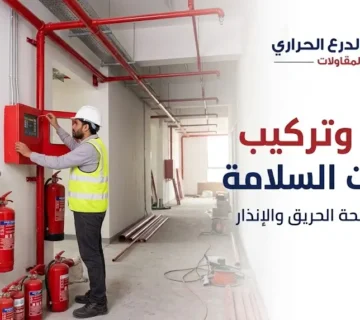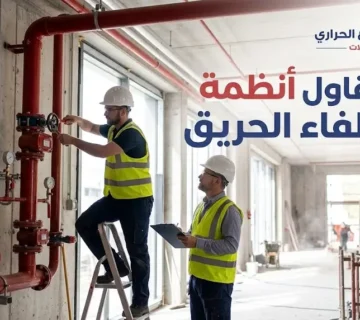

Installing fire alarm and firefighting systems in an industrial facility does not mean the facility has automatically become safe. A system may be technically sound yet fail during an actual incident due to a lack of routine monitoring, an evacuation plan not enforced on the ground, or insufficient staff training on safety equipment. Here lies the critical role of the industrial security officer as the connecting link between the physical presence of safety systems and their operational readiness when needed. Ultimately, the industrial security officer duties determine the overall efficiency of these systems and their ability to function during critical moments.
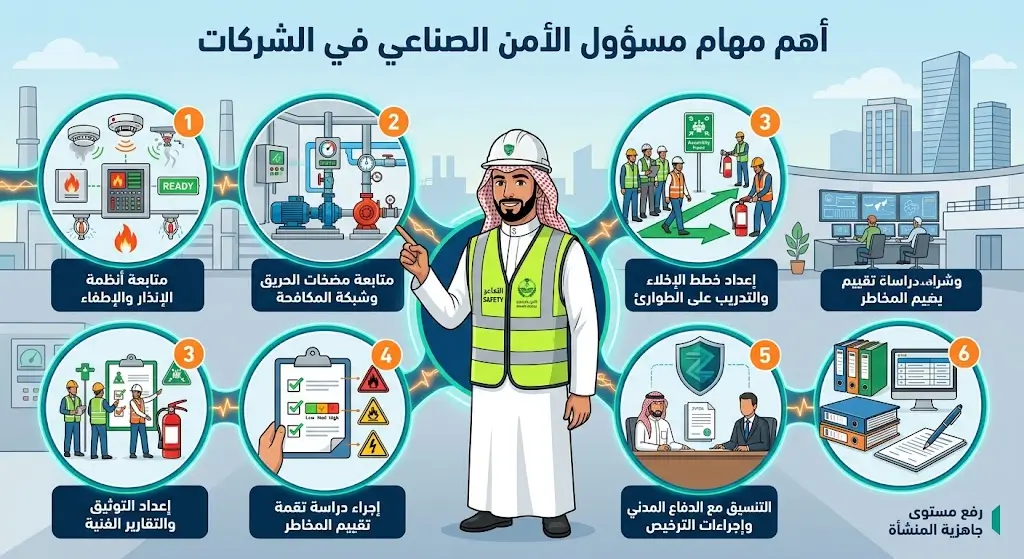
Table of Contents
- Who is the Industrial Security Officer in a Facility?
- What is the Regulatory Framework for Industrial Security Officer Duties?
- What are the Key Industrial Security Officer Duties in Companies?
- What Qualifications and Experience are Required for an Industrial Security Officer?
- What is the Difference Between an Industrial Security Officer and a Safety Systems Design Engineer?
- What Common Mistakes Undermine the Effectiveness of an Industrial Security Officer?
- What Technical Points Must be Reviewed Periodically?
- What is the Relationship Between the Industrial Security Officer and Specialized Safety Companies?
- Frequently Asked Questions About Industrial Security Officer Duties
- Conclusion
📞 Call Us |
Who is the Industrial Security Officer in a Facility?
The industrial security officer is the designated professional responsible for overseeing compliance with fire prevention and life safety requirements within a facility. Their mandate is to ensure that fire alarms, firefighting networks, fire pumps, and evacuation plans operate precisely as designed, serving as the liaison between the organization, competent regulatory authorities, facility staff, and technical systems.
This role is not limited to heavy industrial complexes; commercial and service facilities also require dedicated personnel to supervise safety workflows continuously, given the varying risk profiles and statutory fire protection requirements across sectors to satisfy Safety and security requirements.
What is the Regulatory Framework for Industrial Security Officer Duties?
The regulatory framework in Saudi Arabia establishes clear obligations for fire safety and protection across public and private entities. The General Directorate of Civil Defense updated the regulatory bylaws governing safety and industrial security personnel, officially designating the role as Safety, Prevention, and Fire Protection Officer. This update aims to enhance facility emergency readiness, maintain fire protection system reliability, and specify the mandatory qualifications and competencies required for the role.
Consequently, industrial security officer duties are not merely internal corporate protocols, but statutory mandates aligned with official codes and Industrial security. Every organization must consistently review the standards applicable to its specific occupancy classification.
Furthermore, high-risk industrial facilities must adhere to the Higher Commission for Industrial Security (HCIS) directives for protecting critical petroleum, industrial, and service infrastructures through comprehensive Industrial security frameworks.
What are the Key Industrial Security Officer Duties in Companies?
Monitoring Early Warning and Firefighting Systems
A primary aspect of industrial security officer duties is ensuring that smoke and heat detectors provide complete spatial coverage, while supervising the main Fire Alarm Control Panel (FACP) to verify that signals and trouble indicators transmit accurately to monitoring stations.
Responsibilities also include overseeing fixed fire suppression systems—such as automatic fire sprinkler networks and clean agent gas systems (FM-200, Novec 1230) in critical areas like electrical switchgear and server rooms—to ensure regular inspections and testing per NFPA and Saudi Building Code standards.
A single defective detector or an unmonitored zone can cause critical delays in fire detection; hence, routine oversight is an indispensable responsibility.
Supervising Fire Pumps and the Suppression Network
Fire pumps represent the core of water-based suppression systems; inadequate hydraulic pressure renders sprinkler heads and landing valves ineffective during an active fire. Industrial security officer duties include comprehensive pump room checks, such as:
- Inspecting the primary electric motor fire pump for operational readiness.
- Verifying diesel engine readiness, fuel levels, and starting battery health.
- Monitoring the jockey pump to maintain baseline hydrostatic pressure within limits.
- Documenting periodic churn and flow test logs.
- Following up on preventive maintenance schedules and repairs.
- Ensuring all trouble alarms on pump controllers are cleared.
Testing intervals vary according to design specifications and applicable codes (NFPA 20 and NFPA 25), requiring adherence to certified engineering parameters.
Drafting Evacuation Plans and Emergency Drills
Core industrial security officer duties involve drafting and updating emergency evacuation blueprints, mapping emergency exit corridors, designating assembly points, and establishing egress routes for all floors.
The officer must ensure that emergency exit routes remain completely unobstructed and that panic hardware on fire doors functions smoothly from the inside.
An evacuation plan requires practical drills to be effective. The officer coordinates live simulation exercises for staff covering alarm response, safe evacuation protocols, and hands-on usage of basic fire extinguishers.
Conducting Workplace Risk Assessments
The officer must systematically identify hazardous conditions across the premises, including flammable liquid storage, high electrical loads, ignition sources, and high-risk operational zones requiring dedicated safeguards.
Risk assessment studies establish safety priorities and channel mitigation efforts to vulnerable areas. These studies must be formally revised upon architectural renovations, introduction of new machinery, or alterations in operational scope.
Liaison with Civil Defense and Statutory Licensing
A significant administrative aspect of industrial security officer duties involves managing statutory safety compliance, preparing documentation for field audit visits to secure تراخيص السلامة licensing, and resolving regulatory inspection remarks within stipulated deadlines.
The officer coordinates across internal departments to execute corrective engineering measures without leaving technical audit notes unaddressed.
Technical Documentation and Reporting
Maintaining detailed logs of inspections, functional testing, preventative maintenance, and employee drills is essential. This includes recording fire pump test curves, detector calibrations, and maintenance reports.
Comprehensive documentation demonstrates compliance during audits, highlights recurring equipment faults, and streamlines annual تجديد الرخص الفنية license renewal processes.
📞 Call Us |
What Qualifications and Experience are Required for an Industrial Security Officer?
Civil Defense regulatory standards define mandatory professional qualifications for safety and fire protection personnel. Assigning industrial security officer duties must be based on verified technical competencies rather than arbitrary internal appointments.
The officer must possess solid working knowledge of fire safety systems, national building codes, and regulatory compliance frameworks, coupled with strong administrative and reporting skills.
If internal qualified personnel are unavailable, organizations should partner with accredited engineering consulting firms to support system design, inspection, and maintenance for Safety license approval.
What is the Difference Between an Industrial Security Officer and a Safety Systems Design Engineer?
The role of an industrial security officer differs distinctly from a fire protection design engineer. The officer oversees operational readiness and on-site protocol enforcement, whereas the design engineer performs hydraulic modeling, equipment sizing, and engineering specifications according to building architecture.
The security officer does not replace the design engineer. Any modifications to hydraulic distribution, pump capacity upgrades, or system re-engineering must be calculated and stamped by a licensed mechanical fire engineer.
What Common Mistakes Undermine the Effectiveness of an Industrial Security Officer?
Several organizational practices can degrade facility safety posture, including:
- Treating safety systems as self-maintaining without routine functional checks.
- Postponing fire pump testing until official audit visits occur.
- Failing to revise evacuation drawings after architectural remodeling.
- Conducting a one-off safety orientation without scheduled refresher training.
- Neglecting inspection, testing, and maintenance logbooks.
- Assigning security officer duties without granting authority to rectify violations.
What Technical Points Must be Reviewed Periodically?
Routine inspections prevent minor equipment faults from escalating into system failures. Essential inspection points within industrial security officer duties include:
- Operational status of electric, diesel, and jockey fire pumps per test standards.
- Integrity of the pump control panel, clearing all active trouble faults.
- Functionality of smoke, heat, and flame detectors across all facility zones.
- Unobstructed access to emergency exit doors and primary egress pathways.
- Readiness, charge pressure, and physical positioning of portable fire extinguishers.
- Current records of staff emergency drill completions.
What is the Relationship Between the Industrial Security Officer and Specialized Safety Companies?
An effective industrial security program relies on high-quality fire safety infrastructure. Routine monitoring cannot compensate for an undersized piping network or a non-compliant fire suppression system.
Thermoshield Safety & Contracting Company provides comprehensive life safety solutions, including fire alarm and suppression system installations, certified fire pump sets, evacuation planning, emergency lighting supplies, preventative maintenance agreements, and accredited risk assessment studies.
These services provide industrial security officers with engineering support to maintain statutory code compliance across all building types.
Frequently Asked Questions About Industrial Security Officer Duties
What is the difference between an Industrial Security Officer and a Fire Safety Officer?
Under updated Saudi Civil Defense nomenclature, the formal designation is Safety, Prevention, and Fire Protection Officer. In practice, both terms describe an identical scope of life safety and asset protection responsibilities.
Can a non-specialized employee perform industrial security officer duties?
Regulatory bylaws require specific qualifications and safety training. These duties should not be assigned without verified technical competence or external engineering support.
Is a single fire pump sufficient for any facility?
Pump configurations depend on occupancy risk, total hydraulic demand, and code mandates, typically requiring an electric driver, a standby diesel unit, and a jockey pump.
How often must fire pumps be tested?
Testing schedules follow NFPA 25 standards: weekly operational runs for diesel sets, monthly runs for electric pumps, and an annual full-capacity hydraulic flow test.
Does appointing an industrial security officer replace Civil Defense licensing?
No. The officer manages internal compliance and prepares technical files, but does not replace statutory licensing procedures or official approvals.
📞 Call Us |
Conclusion
Industrial security officer duties extend beyond the initial installation of fire alarm and firefighting systems. Active oversight begins post-commissioning, encompassing regular system inspections, maintenance logging, evacuation drill coordination, liaison with Civil Defense, and workplace risk management.
Aligning these operational duties with engineered safety systems maximizes emergency readiness. To audit, maintain, or upgrade your facility fire protection systems, contact Thermoshield Safety & Contracting Company to establish technical project parameters before execution.