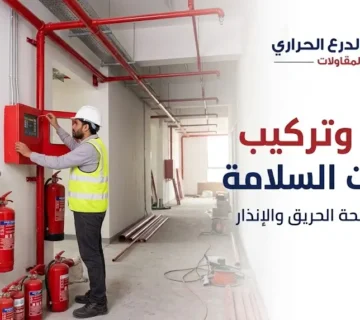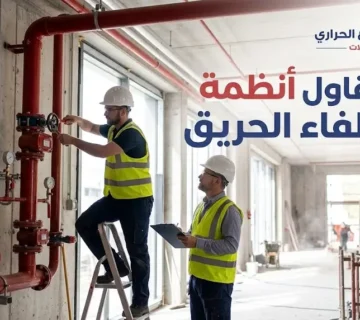

A fire alarm systems supply and installation company ensures that the protection efficiency of lives and property inside urban and industrial facilities directly relies on engineering design precision and selecting an approved provider that guarantees complete integration between smoke detectors and self-suppression equipment to minimize response times.
Table of Contents
- Criteria for Choosing a Fire Alarm Supply and Installation Company
- Addressable and Conventional Alarm Network Engineering
- The Role of Main FACP Control Panels in the System
- Advanced Smoke Detection Technologies and VESDA Systems
- FM200 and Carbon Dioxide Fire Suppression Systems
- Automatic Sprinkler Networks and Foam Fire Suppression
- Designing, Testing, and Approving Fire System Layouts
- Periodic Maintenance and Preventive Operations Contracts
- Compliance with NFPA Standards and Civil Defense Regulations
- Global Quality Specifications: UL, FM, and ISO
- Comprehensive Fire Alarm Supply and Installation Solutions
- Frequently Asked Questions
- Conclusion
Call Us |
Protection and safety engineering demands total alignment with NFPA and Civil Defense regulations. Approved contractors are selected based on past engineering experience, international accreditations (UL/FM), and capability to design and operate addressable control panels with absolute operational efficiency.
Criteria for Choosing a Fire Alarm Supply and Installation Company
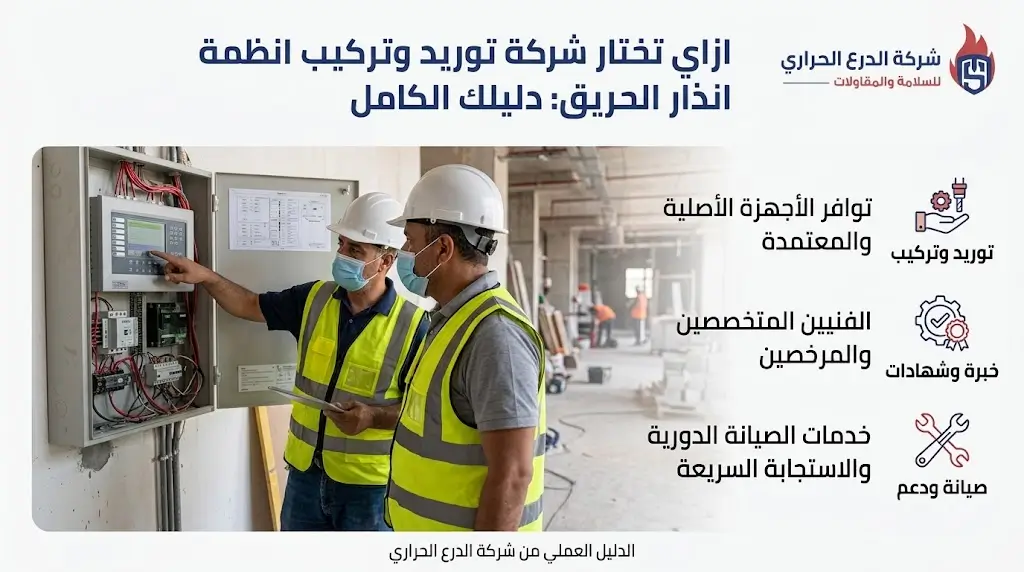
The evaluation and selection accuracy of a fire alarm supply and installation company depends on certified engineering competence, executed project records, and strict compliance with local and international regulatory standards, ensuring facilities remain free of operational vulnerabilities.
Major construction projects require deep infrastructure understanding. Thermoshield conducts precise electrical load studies, risk analyses matching activity nature (commercial, industrial, residential), and selects fire-resistant cables to ensure emergency system continuity under severe thermal conditions.
Addressable and Conventional Alarm Network Engineering
Addressable networks rely on digital signal processing, where each detector carries a unique address transmitting detailed location data to the control panel, whereas conventional systems divide buildings into zones grouping multiple detectors on a single signaling line without precise fault pinpointing.
- Addressable Systems: High programming flexibility, hundreds of device integration capacity, and meter-level location accuracy reducing rescue search time.
- Conventional Systems: Cost-effective for small facilities, relying on electrical resistance changes when detectors trigger or manual call points are pressed.
- Engineering Integration: Thermoshield provides comparative studies to determine optimal systems based on footprint size and hazard levels.
The Role of Main FACP Control Panels in the System
The Fire Alarm Control Panel (FACP) serves as the master controller of the safety network, receiving critical signals from sensors and translating them to trigger evacuation alarms, HVAC smoke control, and automatic suppression start signals.
Modern panels supported by Thermoshield feature smart monitoring and touch screen interfaces, backed by standby batteries guaranteeing full operation for at least 24 hours in standby and 15 minutes in full alarm during main power failures.
Call Us |
Advanced Smoke Detection Technologies and VESDA Systems
Sensitive environments, server rooms, and electrical control rooms require ultra-high sensitivity for early smoke detection before fire escalation, highlighting Very Early Smoke Detection Apparatus (VESDA).
- Operation Mechanism: Continuous air sample extraction via micro-tubing networks analyzed optically by high-sensitivity lasers.
- Alarm Tiers: Provides proactive warning gradation (Alert, Action, Fire 1, Fire 2) to remediate situations prior to visible smoke appearance.
- Conventional Detectors: Optical smoke detectors and rate-of-rise/fixed temperature heat detectors distributed in false ceilings and general corridors.
FM200 and Carbon Dioxide Fire Suppression Systems
Clean agent gas suppression systems protect valuable assets damaged by water, where FM200 breaks the chemical fire reaction chain in under 10 seconds without chemical residue or electronic damage.
| Comparison Metric | FM200 Gas Suppression System | CO2 Gas Suppression System |
|---|---|---|
| Working Principle | Lowers fire heat and breaks reaction | Oxygen displacement and fast cooling |
| Application Scope | Server rooms & sensitive centers | Generator rooms & enclosed factories |
| Human Safety | Completely safe at approved concentrations | Suffocation hazard (requires immediate evacuation) |
| Environmental Impact | Eco-friendly, ozone-safe | Leaves no residue but requires strict ventilation |
Automatic Sprinkler Networks and Foam Fire Suppression
Automatic sprinkler systems act as the primary defense line to extinguish material fires via thermally programmed water flow, while foam systems target flammable liquid fires in fuel depots and petrochemical plants executed professionally by top fire alarm supply and installation companies.
Conventional networks comprise alarm check valves, UL/FM-listed diesel, electric, and jockey fire pumps, and thermal sprinkler heads with varying fusing temperatures (68°C, 79°C, etc.) ensuring only damaged sprinklers open.
Designing, Testing, and Approving Fire System Layouts
Safety layout approval involves precise engineering phases starting with spatial surveys and dropping detector locations and piping paths on advanced BIM modeling software (AutoCAD & Revit) to eliminate electromechanical clashes.
Thermoshield runs complex hydraulic calculations for suppression networks to verify water/gas pressure and flow adequacy, followed by hydrostatic pressure testing and Cause & Effect Matrix functional testing prior to formal Civil Defense submission.
Periodic Maintenance and Preventive Operations Contracts
Safety is not limited to structural setup; systems require periodic preventive maintenance contracts covering detector testing with aerosol test gas, gas cylinder pressure measurement, power supply inspection, and weekly fire pump operational tests.
Thermoshield provides scheduled maintenance programs (monthly, quarterly, annual) with certified engineering reports ensuring facility safety readiness for sudden regulatory inspections, supported by 24/7 emergency response.
Call Us |
Compliance with NFPA Standards and Civil Defense Regulations
All supply, installation, and testing works adhere to National Fire Protection Association (NFPA) requirements, particularly governing codes such as NFPA 72 for alarm systems, NFPA 13 for sprinkler networks, and NFPA 20 for fire pumps, alongside Saudi Building Code requirements (SBC 801).
Thermoshield ensures complete component compliance with Saudi Civil Defense regulations, streamlining occupancy licensing and commercial/industrial permit renewals without regulatory roadblocks.
Global Quality Specifications: UL, FM, and ISO
Safety network efficiency relies on individual component quality. Thermoshield utilizes devices certified by Underwriters Laboratories (UL) and Factory Mutual (FM), alongside ISO 9001 global quality certifications.
These certifications guarantee that detectors, panels, valves, and pipes withstand extreme temperatures, corrosion, and regional environmental extremes, backed by long-term commercial and engineering warranties.
Comprehensive Fire Alarm Supply and Installation Solutions
Thermoshield provides an integrated, tailored package via fire alarm supply and installation company services combining approved engineering supply, professional installation by certified engineers, advanced FACP programming, and comprehensive maintenance achieving reliable safety for major facilities.
Frequently Asked Questions
What is the timeframe required to install a fire alarm system?
Durations vary based on facility size and system scale, but medium projects typically take two to four weeks for wiring, installation, and programming.
Is the FM200 gas system safe for individuals inside offices?
Yes, completely safe at engineering design concentrations (7% to 9%), with gas discharge preceded by an audible warning giving personnel adequate evacuation time.
What maintenance frequency is required for fire alarm networks?
International standards and Civil Defense recommend comprehensive preventive checkups and maintenance every three months, plus weekly fire pump testing.
Does Thermoshield provide certified Civil Defense certificates?
Yes, the company issues certified engineering reports matching all Civil Defense requirements to facilitate facility permit renewal with high efficiency.
What is the difference between an optical detector and a heat detector?
Optical smoke detectors sense fine airborne particles for corridors and offices, while heat detectors sense rapid temperature increases suited for kitchens and parking structures.
How are appropriate fire pumps chosen for a building?
Calculated professionally by Thermoshield engineers based on maximum building height, total area, and expected simultaneous sprinkler operations per NFPA 20.
Conclusion
Never underestimate safety standards in your facility. Get advanced engineering consultation and approved supply and installation services through direct communication with Thermoshield engineering experts to protect your assets and pass all Civil Defense requirements with total confidence (thermoshield.sa).